
International Conference on Holography and its Applications
September 9-10, 2026
Damghan University,
Damghan,
Iran.
Paper submission submission deadline:
August 22, 2026 (Extended)
Registration deadline:
August 30, 2026 (Extended)




It is our great pleasure to welcome you to the 5th International Conference on Holography and Applications 2026 (ICHA 2026), hosted in person at Damghan University, Iran. We are delighted to gather leading scientists, scholars, and innovators from around the world in the historic city of Damghan, where tradition, scientific curiosity, and cultural richness converge.
ICHA 2026 provides a unique platform for presenting cutting-edge research in holography and its applications.
We invite you to enjoy the cultural and historical heritage of Damghan, its warm hospitality, and the vibrant academic atmosphere of our campus.
On behalf of the Organizing Committee, we extend our heartfelt welcome to all participants and wish you a productive, inspiring, and memorable experience at ICHA 2026.
Conference Proceedings Are Now Available The proceedings of the 5th International Conference on Holography and its Applications are now available. Explore the conference contributions using the link below. Download the Proceedings
Conference Session Recordings Available The video recordings of the ICHA2026 conference sessions are now available for viewing. You can access the complete playlist on our YouTube channel via the link below. Watch Conference Recordings
The detailed Scientific Program of ICHA 2026 is available below. It includes the schedule of keynote lectures, scientific sessions, and contributed presentations for September 9–10, 2026.
Please note that the program may be subject to minor changes.
Foundations of the Holographic Principle and AdS/CFT Correspondence
Holographic aspects of Quantum Information and Quantum Computing
Holography and Strongly Correlated Systems
Holography and Cosmology
Machine Learning for the Holographic Principle
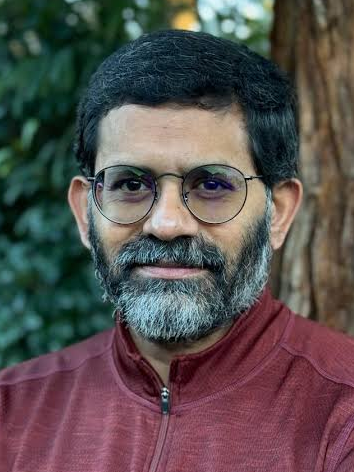
Department of Physics and Astronomy, UC Davis, USA
Imprints of the black hole singularity in field theory observables
I will review recent progress on understanding how the black hole singularity is encoded in thermal observables. Specifically, the non-perturbative high frequency part of the thermal spectral function carries the relevant information. For holographic CFTs, where the correlators can be computed using bulk semiclassical physics this information can be accessed using exact-WKB techniques.

London Institute for Mathematical Sciences and Merton College, Oxford, UK
Calabi-Yau manifolds: from geometry, to physics, to AI-driven Discovery
Calabi-Yau geometries have been at the fruitful intersection between pure mathematics and theoretical physics. Over the last 8 years, they have also provided a rich playground for AI-driven explorations in scientific discovery, inspiring approaches to problems that arise in diverse areas ranging from field theory, to algebraic geometry, to number theory. We give an overview of this progress, with a perspective on how AI will be transformative in the mathematical sciences in three intertwined directions: theorem-proving, conjecture formulation, and Large Language Models.

School of Physics, IPM, Iran
GR from RG
We demonstrate how the effective action of a non-gravitating quantum field theory in the ultraviolet (UV) develops an Einstein-Hilbert term in the infrared (IR). Hence, we show how General Relativity (GR) is induced from the RG flow. To this end, we use the holographic AdS/CFT framework, while as we argue this framework is not an essential part of the main proposal and result. Our GR from RG proposal is not only providing a new perspective on the nature of GR and gravity, it also points to a conceptually new addition to the standard Wilsonian RG flow, also provides the mechanism to evade the Weinberg-Witten no-go theorem. The GR from RG proposal also suggests that one should revisit the search for a quantum theory of gravity: gravity is not a fundamental interaction and need not be quantized, the same way that one usually does not quantize fluid dynamics.

School of Quantum Physics and Matter, IPM, Iran
Beyond Krylov Complexity
We introduce Krylov-space memory cores as stationary, depth-resolved structures revealing how anomalous initial-state memory is organized in otherwise thermalizing nonintegrable systems. Stationary occupation profiles locate late-time probability along the Krylov chain, while complementary diagnostics characterize residual fluctuations, Gibbs mismatch, and persistent current fluctuations. Across weak thermalization, confinement-induced anomalous dynamics, and many-body scarring, anomalous states develop compact low-depth memory cores embedded within broader occupation halos. Reference states lack comparable signal strength and compactness.
Zahra Haghani - Damghan University, Iran- Chair
Babak Khanbabaei - Damghan University, Iran
Ahmad Naghidokht - Damghan University, Iran
Shahab Shahidi - Damghan University, Iran
Morteza Tavakkoli - Damghan University, Iran
The 1st conference (2022):
https://holography.du.ac.ir/en
The 2nd conference (2023):
https://holography2023.du.ac.ir/en
The 3rd conference (2024):
https://holography2024.du.ac.ir/en
The 4th conference (2025):
https://holography2025.du.ac.ir/en
©All rights reserved by .